
Is This Money Worth the Cost?
Estimated Reading Time: 6 minutes
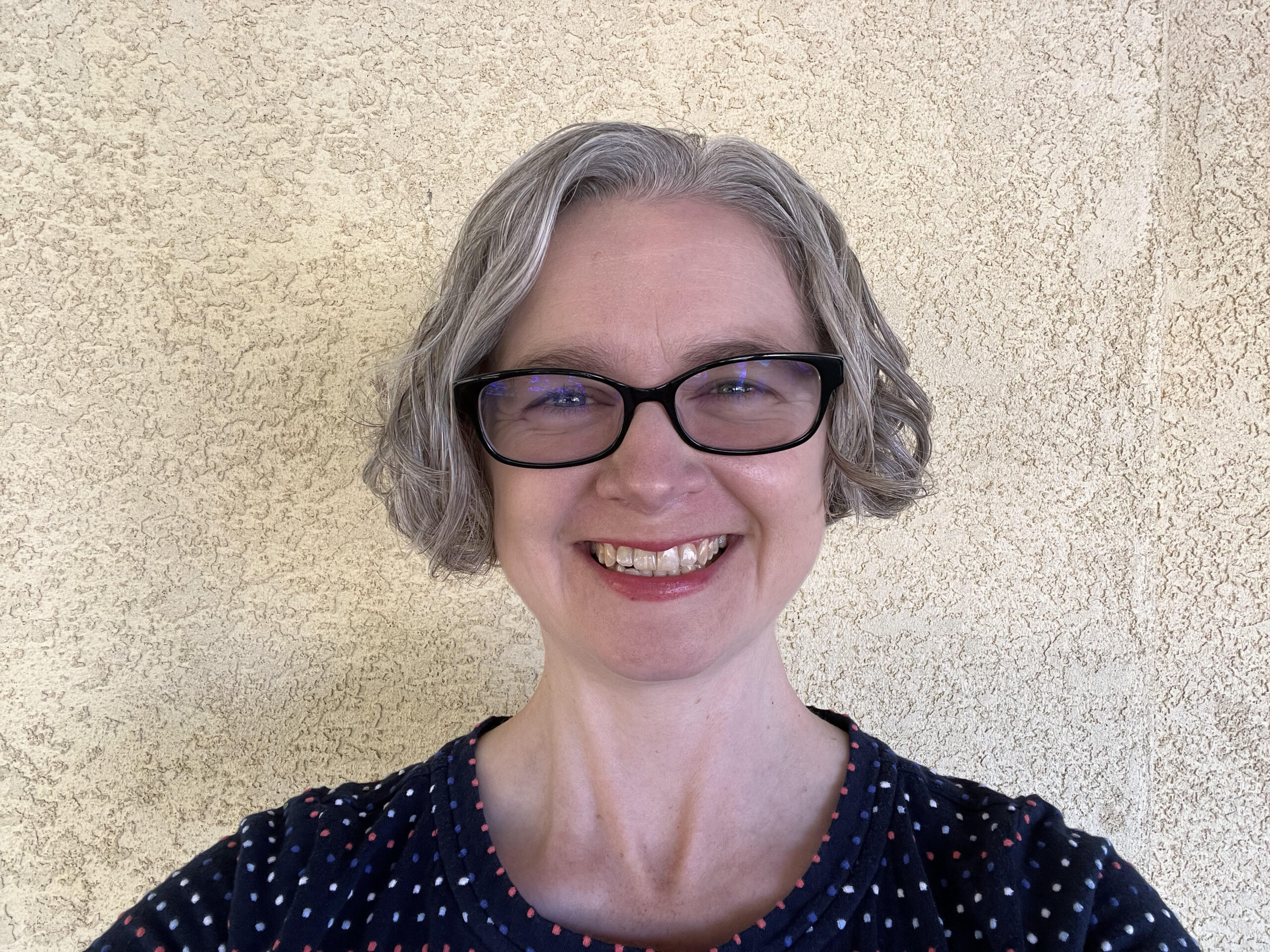
By Rachel Sams
Lead Consultant and Editor
When your development director mentions the funding opportunity at a meeting, pulses quicken. The donor’s name rings out. It’s a large corporation that’s made several major grants recently to organizations your team knows. The company has a reputation for funding innovative, boundary-breaking nonprofit projects, and asking for data-verified evidence of impact.
Your team has been toying with the idea of launching a new service that’s adjacent to your current offerings, but outside your expertise. Community data shows the need is there. Your visionary CEO wants to jump in, but several senior leaders fear your organization isn’t the right one to provide these services.
Will this new donor provide the missing piece to help your nonprofit launch a new service that will expand your reach and deepen your community ties? Or will chasing this money pull you away from your mission and community into projects you can’t deliver well—topped off with a heap of new paperwork?
Since the beginning of philanthropy, nonprofits have had to weigh tough decisions about whether a possible funding source is worth the risk. Many nonprofits are having more of these conversations now, with drastic cuts in nonprofit funding and burdensome, confusing executive orders. Numerous leadership and board meetings include serious discussion about funding possibilities teams would have automatically dismissed as too risky a few years ago.
In those initial moments of excitement—or fear—it can be difficult to know how to evaluate the upside and downside risks a new funding opportunity presents. But while every funding opportunity is different, a simple framework can help you evaluate the risks of them all. We offer guidelines you can use or adapt to guide your team through challenging decisions about funding. You can use them to evaluate a variety of opportunities, from corporate partnerships to foundation support to individual donations to whether to host a new fundraising event. We can’t supply the answers, but simple question prompts can help your organization reach the best decisions for your needs and circumstances.
A Framework to Evaluate Fundraising Risk
Here’s a flexible fundraising risk evaluation framework to customize for your nonprofit.
Alignment: Does this funding opportunity benefit our mission, strategy and goals, or pull us away from them?
Questions to consider:
- Does the funder share our values? What makes us say so? How thoroughly have we investigated our assumptions about that?
- Which strategic goal or priority could/would be bolstered by pursuing this opportunity? Are there potential downsides or unintended consequences (e.g., drawing the team away from focus on multiple priorities)?
- If this is an internal opportunity (adding a new fundraiser, etc.), do the event type and purpose reflect our mission and values?
- What long-term benefit would this opportunity provide our clients and community?
Readiness: Do we have the resources to meet the demands of this funding opportunity?
- What do we understand this funding opportunity requires of us in terms of programming, reporting, communication and more? What are the ‘unknowns’ we could discover?
- Does our staff have the time to do the additional work this funding opportunity would require? What new systems or expertise might be required? How can we obtain them? How would those systems or expertise benefit or cost us beyond this relationship?
- What could we stop or pause doing to make room for this new endeavor? Would that be an acceptable tradeoff?
Money: What would it cost us to pursue and participate in in this funding opportunity, and how much financial benefit would it bring to the organization?
- What are our upfront costs for this funding opportunity (new systems, staff time)?
- What is our expected financial return or potential loss? What is a reasonable range (from loss, to breaking even, to possible net income)? What is our contingency plan if the return is less than expected?
- How reliant will we become on this funding opportunity? Are we within our level of comfort for support on one funding source?
Consequences: What unexpected downsides could result from pursuing this funding?
- What are the explicit terms of this funding? What are possible unspoken or implied expectations? How difficult would those terms be to comply with? What might be the unintended consequences of complying with them?
- What are possible legal and regulatory implications of accepting this funding? Are we prepared to address them?
- How would our constituents (clients, community, board, partners) view us if every detail of the terms of this relationship or funding opportunity became public tomorrow?
- How could we continue this work if this funding suddenly disappeared? What would be the consequences of losing the support? How might we plan for those consequences?
Go Beyond Urgency
You know the dance. Maybe your development team hears about the funding opportunity through word-of-mouth. Perhaps an RFP hits your inboxes. A corporate giving executive you know—or one you don’t—wants to meet. A contact card comes in from a fundraising event with a name you’ve been trying to get a meeting with for years: I want more information. Wherever the lead comes from, you swing into action: researching the person or organization, drafting talking points for the conversation, considering what an ask might look like.
Nonprofits have a history of treating funding opportunities with urgency. Funding opportunities have never been unlimited, and as the pool of funding for nonprofits ebbs and flows, a sense of scarcity and competition can arise. For many nonprofits, the fundraising train never stops.
Urgency can be good—to a point. It can help our organizations achieve and maintain momentum. But when urgency overshadows critical thought about whether to pursue an opportunity, the risk of pursuing funding that doesn’t align with your mission increases. You might overestimate how well a funding possibility fits with your mission. You might be too generous in your assessment of how ready your team is to do the work a funding opportunity requires, including the costs and staff time to apply or compete for it. And you may underestimate the reputational risk a donor or company presents, including the risk of a partnership that—even if the donor or organization brings no controversy—simply doesn’t fit community needs.
A smart fundraising risk evaluation framework goes beyond mere caution. It helps you evaluate how ready your organization is to go the distance on a funding opportunity, and how well it would suit your mission and benefit all parties to do so.
Your nonprofit likely has fundraising approaches you’ve used for a long time. Some of those approaches may work well for you. Others may feel limiting or frustrating. The framework can help—but only if you use it! Your team will probably need some time to incorporate the fundraising risk framework into decision-making. Here are some ways to work it into your process.
- Include the framework as a checklist for discussion in the fundraising team, senior leadership team, or committee meetings where decisions are made.
- Document how you used the framework and the decisions you made in your CRM, meeting minutes, or wherever you keep track of important fundraising information.
- Practice! As you use the framework, note what you like about it and what may not feel quite right for your organization. Make any needed adaptations to the framework to make it work for you.
- Talk about the framework. Explain it to top leadership, board members, and even funders, and share how it factors into your decisions.
Good Decisions Don’t Dodge Risk—They Weigh It
All fundraising decisions carry potential downsides, upsides, and consequences. That can make them feel weighty. They are—but a thoughtful, flexible framework helps your team carry that weight with confidence. As you use the framework, we hope you’ll find that your team’s confidence in decisions about pursuing or accepting funds will grow. The framework doesn’t guarantee you’ll make the right decisions every time, but it should help guide your team toward a decision that reflects your values. That’s a process you can learn from—no matter how it plays out—and replicate what works.
Rachel Sams is a Lead Consultant and Editor at the Nonprofit Risk Management Center. Reach her with thoughts and questions about this article at rachel@nonprofitrisk.org or (505) 456-4045.
“One thing I love about the Risk Summit is the opportunity to connect and learn from other risk managers, nonprofit professionals, and NRMC staff. I have attended the Risk Summit multiple years and always look forward to connecting with returning attendees and meeting new people. The Risk Summit brings together a diverse and engaged set of professionals who are ready to learn, share, and connect.”
— Heather Chadwick
“I love the Risk Summit because I always learn something valuable, such as new approaches to the issues I’m grappling with. I always leave the Risk Summit with a notebook full of practical ideas. I also leave with an expanded network of professional acquaintances and a feeling it was the most useful conference I’ve been to in quite a while. I am in awe how such a topic as risk management can be artfully delivered.”
— Paul Doman
“One thing I love about the Risk Summit is the ability to see and feel the passion of nonprofit leaders as they learn and share together.”
— Michael Schraer
“One thing I love about the Risk Summit is connecting and learning from / with really great people.”
— Lisa Prinz
“First let me congratulate you on a conference well done. I had a great time at the Nonprofit Employee Benefits Conference and walked away with some valuable tools and questions that we’ll need to be addressing in both the short and long term. Thanks to you and your staff for all you do to provide us with quality resources in support of our missions.”
— Scott Brown, Mohonk Preserve
“BBYO’s engagement of NRMC to conduct a risk assessment was one of the most valuable processes undertaken over the past five years. Numerous programmatic and procedural changes were recommended and have since been implemented. Additionally, dozens (literally) of insurance coverage gaps were identified that would never have been without the work of NRMC. This assessment led to a broker bidding process that resulted in BBYO’s selection of a new broker that we have been extremely satisfied with. I unconditionally recommend the Center for their consultative services.
— Sidney Abrams, BBYO
“Melanie Herman has provided expert, insightful, timely and well resourced information to our Executive Team and Board of Directors. Our corporation recently experienced massive growth through merger and the Board has been working to better integrate their expanded set of roles and responsibilities. Melanie presented at our Annual Board of Director’s Retreat and captured the interest of our Board members. As a result of her excellent presentation the Board has engaged in focused review which is having immediate effects on governance.”
— Pamela Mattel, Basics Promesa Systems Inc
“The Nonprofit Risk Management Center has been an outstanding partner for us. They are attentive to our needs, and work hard to successfully meet our requests for information. Being an Affiliate member gave us access to so many time- and money-saving resources that it easily paid for itself! Nonprofit Risk Management Center is truly a valued partner of The Community Foundation of Elkhart County and we are continuously able to optimize staff time with the support given by their team.”
— Jodi Spataro, Community Foundation of Elkhart County
“The board and staff of the Prince George’s Child Resource Center are extremely pleased with the results of the risk assessment conducted by the Nonprofit Risk Management Center. A thorough scan revealed that while we are a well run organization, we had risks that we never imagined. We are grateful to know that we have now minimized our organizational risks and we recommend the Center to other nonprofits.”
— Marti Worshtil, Prince George’s Child Resource Center
Great American Insurance Group’s Specialty Human Services is committed to protecting those who improve your communities. The NRMC team has committed to delivering dynamic risk management solutions tailored to nonprofit organizations. These organizations have many and varied risk issues, hence the need for specialized coverage and expert knowledge for their protection. We’ve had Melanie speak on several occasions to employees and our agents. She is always on point and delivers such great value. Thank you for the terrific partnership and allowing our nonprofits to focus on their mission!